Contact Us

Have an inquiry? Please send us a message.


123 Street Avenue, City Town, 99999

(123) 555-6789

email@address.com


You can set your address, phone number, email and site description in the settings tab.
Link to read me page with more information.

News

News from Elf, a digital creative agency at the intersection of the arts and sciences.

Filtering by Category: Industry Insight

Standing on the Shoulders of Giants: Understanding How Progress Happens and Creating a Culture of Creativity

Elf

Manifesting Ideas Into Reality From Florentine Bottegas to Studios, Labs and R&D

Image of ‘Tony Stark’ in the Iron Man (2008), by Marvel

Image of ‘Tony Stark’ in the Iron Man (2008), by Marvel

Next to a roaring furnace, a tall and muscular man is hard at work. His face is sweaty and his brow is furrowed in concentration as he pounds hot metal pulled out of his forge with large tongs. Sparks fly off the metal that glows bright orange and fiery red. Occasionally, a spark will touch his skin, but he does not flinch. Every muscle in his arms is put to work. With precision, he warms wrought iron pieces to almost a white heat and then hammers them together, welding them fast into one indistinguishable piece. Again and again, he repeats the process until he has fifty matching railings, all exquisite in their design and craftsmanship. As he lays each final piece down on a rack to cool, the blacksmith however, shakes his head, unsatisfied. Each piece, the same in length, has a slightly different weight. The hours pass by as he labor away, and finally produces a batch of final implements that meet his discerning eye.


Image via StatueCrafts

Image via StatueCrafts

Supreme craftsmanship in creating powerful yet exquisite tools defined the blacksmith of old. It was no wonder that around such skill and talent, myths and legends sprouted in abundance. Heralded as the artisan of the gods in Greek and Roman mythology, Hephaestus was a blacksmith whose forge was a volcano. In Germanic myths, Völundr was a heroic blacksmith who forged gorgeous gold rings inlaid with sparkling gems. Captured by a cruel king and sequestered on an island, Völundr exacted his revenge by killing the king’s sons, seducing his daughter and escaping on wings that he had forged. In ancient Japan, Masamune was a legendary blacksmith and swords with who not only constructed powerful weapons for samurais, but also taught his students the ways of warfare.

In times of war, having experienced blacksmiths that could create forge-welded axes, chisels, knives and spears, was indispensable. The blacksmith’s trade was not only exquisite to behold, but was also essential for survival.

With just a few tools available to him, such as bronze and later wrought iron and steel, the blacksmith, toiling for hours in his studio next to a blazing fire of charcoal, produced powerful tools for both agriculture and warfare. Creating a consistent temperature that was hot enough to weld the metal pieces, required a precise hand. Everything he did was dependent upon his expertise and careful craftsmanship. Replicating his work was not an easy task. It would take several centuries before the medieval blacksmith’s elegant work could ever be duplicated.

With the advent of the Industrial Revolution, the creation of more sophisticated tools and the availability of a larger labor force, the blacksmith could now create tools and implements much faster and replicate his work more easily. A craft once defined by a sole individual, can now be shared with a team. He also benefits from the modern assembly line and the ability to automate some work processes. Henry Ford’s remarkable invention of the everyday consumer’s automobile, the model T, building upon the original car developed by Carl Benz and founder of Daimler AG, is almost eclipsed by his creation of the modern assembly line — a methodology that surpassed all previous manufacturing up till that point in time.

Image of ‘Tony Stark’ in the Iron Man (2008), by Marvel

Image of ‘Tony Stark’ in the Iron Man (2008), by Marvel

The blacksmith of today is not limited by the same parameters of time or location. Modern advancements free him up to do what he loves best: to create. In many ways, he is right back at the drawing board, whether it is in his mind or conceptually laid out on paper or a computer screen, giving him the opportunity to create works that match his vision entirely.


Drawing Inspiration from Centuries of Craftsmanship

The word ‘create’ has long been associated with artisans, artistic endeavor and spiritual pursuits for eons. In terms of artisans, creating typically means building works of arts from scratch, that can be used for practical purposes such as pottery, wood frames and furniture. Artistic endeavor that does not fulfill a tangible, practical purpose, but an aesthetic one that inspires you, also falls under this description and is primarily attributed to works of art such as music, dance, sculpture and painting. In the Book of Genesis, in the Old Testament in the Bible, it says:

Then God said, ‘Let us make man in our image, after our likeness; and let them have dominion over the fish of the sea, and over the birds of the air, and over the cattle, and over the earth, and over ever creeping thing that creeps upon the earth.’ So God created man is his own image, in the image of God he created him; male and female he created them.
— Genesis 1:26-27, 2:22025
Michelangelo, Creation scenes, Sistine Chapel Ceiling, 1508-12, fresco (Vatican City, Rome)

Michelangelo, Creation scenes, Sistine Chapel Ceiling, 1508-12, fresco (Vatican City, Rome)

Creating is thus attributed to a divine act of God and thus a human being, when he or she creates, is thus imitating the will of God. During the height of the Renaissance movement in Europe, artistic creativity was at its peak. Artwork reflected a synthesis of these beliefs, with sculptures created idealistically to represent the best of humanity in the likeliness of God, while also revealing the artist’s hand.

Close up: Michelangelo, Delphic Sibyl, Sistine Chapel Ceiling, 1508-12, fresco (Vatican City, Rome)

Close up: Michelangelo, Delphic Sibyl, Sistine Chapel Ceiling, 1508-12, fresco (Vatican City, Rome)

Turning down one of Florence’s many winding streets today, you can see the descendants of ancient Etruscans who work with their hands to create individual works of art. The home of Leonardo da Vinci and Michelangelo, the city of Florence was once the heart of the Renaissance art movement. While Italy has changed dramatically, the Florentine bottega or workshop, even today reveals an atmosphere of passion and creativity, fueled by work by hand. These studios are often filled with ceramics, cameos, wood paintings and furniture today by amateur artists and antique restoration artists.

The difference today from our collective past is the opportunity at hand. The restrictions that previously limited creative growth are now lifted. An artist in Florence can continue to make wood paintings or sculptures in the tradition of old, while harnessing a new set of tools available through the web and via powerful software and computer systems.

1552059308-striscia ceramica.jpg
Workshop of La Vecchia Faenza where artisans use techniques and patterns from the 15th century. Photo by Andrea Piffari, Collezione Maramotti, Italy

Workshop of La Vecchia Faenza where artisans use techniques and patterns from the 15th century. Photo by Andrea Piffari, Collezione Maramotti, Italy


In the Last 150 Years: Accelerated Connectivity and Expanded Market Opportunities

In 1846, a twenty-seven year old man by the name of Elias Howe devised the first fully functioning sewing machine, available to the public. With that single invention, Howe revolutionized the clothing industry, giving birth to mass production of clothing quickly and lowering the barrier to entry. Later in 1884, after an embargo was imposed upon English clothing, Isaac M. Singer revised and produced the first electric sewing machine for personal use. A woman who used to make clothes for her family via the old-fashioned method of needle and thread and painstaking labor, could now set up her own shop and earn an income. The expansion of railroad lines all across the country, through the heartland, and into the frontier regions, offered larger opportunities where a tailor could ship goods from New York City to the West coast, thereby increasing market share substantially and earning a comfortable income.

One hundred and fifty years later, another invention would dramatically alter the course of human history, shaping social, cultural and economic dynamics. The personal computer, fully functional by 1976, changed the way people could communicate not only for work, but also for pleasure. The arrival and spreading of bandwidth on the Internet is akin to the expansion of the railroad, allowing the communication of information instantaneously. Just like the railroad enabled merchants to distribute clothing and other products to markets all over the country, dramatically increasing both market supply and demand with lower barriers to entry, bandwidth and wireless connectivity has enabled businesses to connect with consumers all over the world at a fraction of the previous cost, immediately. From a world of only tangible products with limited distribution, the economy has now evolved to where an individual located in a small town can reach a global audience.

The Gutenberg press for example, revolutionized the world of printing as monks no longer had to write out each word slowly through painstaking calligraphy. With the proliferation of presses, words could be reproduced in greater numbers and hence ideas of the world could be spread quickly, inexpensively and efficiently with greater larger areas of distribution and consistency. The Internet has further built upon and expanded upon these opportunities, enabling you to distribute your product or service beyond the confines of your town or city to national and international customers. The advent of such technologies, lowered barriers to entry and a seamless shortening of the innovation cycle, has enabled getting products and services out the door, faster than ever before.

The central actor now is the consumer as the creator of his or her own world, and business better recognize that fast.
— Peter Day, BBC's In Business reporter

A Need for Progress Studies and Pathways for Creativity

Looking at the course descriptions of university syllabi over the last twenty years, particularly in the last five years, you can see a remarkable difference. There is an increasing demand by students and changes made by younger faculty for courses that offer the ability to actually create. Only a few universities and colleges aim to answer this in any feasible way. Most formal education repeats the knowledge of the past, which is important to have. However, in order to understand how progress actually happens and how invention occurs, we need some methods of studying progress. How do we measure progress? How long does progress take? What accelerates progress? What holds progress back? What systems and practices exist today to nurture this?

Creativity is not something you can automate. However, we can nurture methods that foster creativity. What methods can be put together to encourage a culture of creativity and to facilitate the birth of new ideas? The importance of design-led culture and thus creativity through design, has gained traction in many high-performing companies. Patrick Collison, the founder of Stripe, a software infrastructure and payments company, and Tyler Cowen, an economics professor at George Mason University , examine this need for Progress Studies in this compelling article in The Atlantic.


What Does It Mean to Create Today?

In modern times, ‘to create’ means to bring something into existence. The word ‘create’ comes from the Latin verb creare, which means to produce. In Old English, the word create signifies forming out of nothing. What then does it mean to be a creator? A creator is thus someone who produces something new out of nothing. This can be anything — from traditional artistic media such as crafts, visual arts, music, poetry and architecture to a tangible or intangible (software for example) product or service or method of communication.

Creation of new ideas, technologies, systems and products have dramatically altered the way we communicate and work. They have radically improved our collective quality of life as human beings, as individuals and in relationship to one another. We build upon these strengths. We stand upon the shoulders of giants. We are free to pursue creative ideas because these inventions, systems and processes are available to us.


The 21st Century Makes Creation Easier, Faster and Builds Upon Centuries of Achievement

Creators are in people in all of us whenever we go online.
— Paul Saffo, of the Institute for the Future,

Over the last forty years, the Internet has spawned a global connectivity that has transformed the ways we do business, the ways we live and the ways we connect with each other. Each breakthrough has paved the way for new inventions and opportunities, big and small. Today we can harness sophisticated technology tools that alter our perceptions of time, location and connectivity. Many barriers to entry have also been lifted and as the innovation cycle shortens, it has become easier to take an idea from conception to execution than before. That does not deny the tremendous amount of effort required, but it does point to a change in how long it takes to execute an idea. The opportunity to engage in a global marketplace is unprecedented in its accessibility.

It took 100 years for electricity to be adopted by 60 million people worldwide. It took television thirteen years. It took Apple’s App Store just 13 months to reach that milestone. If the Industrial Revolution was transformative, consider how much the App economy has changed the world.

This is the opportunity inherent in today’s creator economy. This vast opportunity comes with its own challenges, but attracts individuals with ambition and a deep desire to create, whether it is on their own or with a company or a team united in purpose. Will you seize it?


Royal Mail Issues New Stamps of Iconic Video Games - Lara Croft, Lemmings, Worm and More

Elf

U.K. Celebrates Popular Video Games of the ‘80s and ‘90s with Commemorative Stamps

Image via Royal Mail

Image via Royal Mail

Royal Mail recognizes some of the U.K.'s most iconic video games of the '80s and '90s such as Lara Croft and Tomb Raider, Lemmings, Worms, Wipeout and Sensible Soccer and more with a series of twelve special stamps. These video games collectively put the U.K. games industry on the world map for video games, growing into a multi-billion dollar enterprise.

Image via Royal Mail

Image via Royal Mail

The collection also showcases different game consoles in use at the time such as the BBC Micro, ZX Spectrum, Commodore Amiga and the Sega Mega Drive. The special stamp collection demonstrates how video games are an important part of the country’s culture.

Image via Royal Mail

Image via Royal Mail

Tomb Raider has a total of four stamps in the collection, showcasing Lara Croft’s adventures throughout the years.

The UK has been at the forefront of the video games industry for decades. In the 1980s and 90s young designers grappled with coding on the new microcomputers and set the template for the industry with iconic games. We celebrate some of their landmark creations on stamps.
— Philip Parker, Royal Mail
Image via Royal Mail

Image via Royal Mail

Selected with the help of the gaming industry trade body UKIE, veteran video game journalist Julian Rignall and Sam Dyer, creative director at Bitmap Books, a publisher that specializes in retro video games, the set of twelve stamps starts in the mid 1980s and focuses on the work of studios such as Bullfrog (Populous) and Codemasters (Dizzy, Micro Machines),and then moves into the 1990s with titles from Liverpool-based publisher Psygnosis (Lemmings and Wipeout), Derby’s Core Design (Tomb Raider) and Wakefield’s Team17 (Worms).

Available on January 21, 2020 in the United Kingdom, the special video games stamp collection can also be preordered for  £14.25 now at Royal Mail’s online store.


The Great Streaming Wars Have Begun: Who Will Win Your Loyal Subscription?

Elf

Streaming Wars Breakdown: The Contenders, The Economics, Who’s Got the Most to Lose, Areas of Opportunity and More

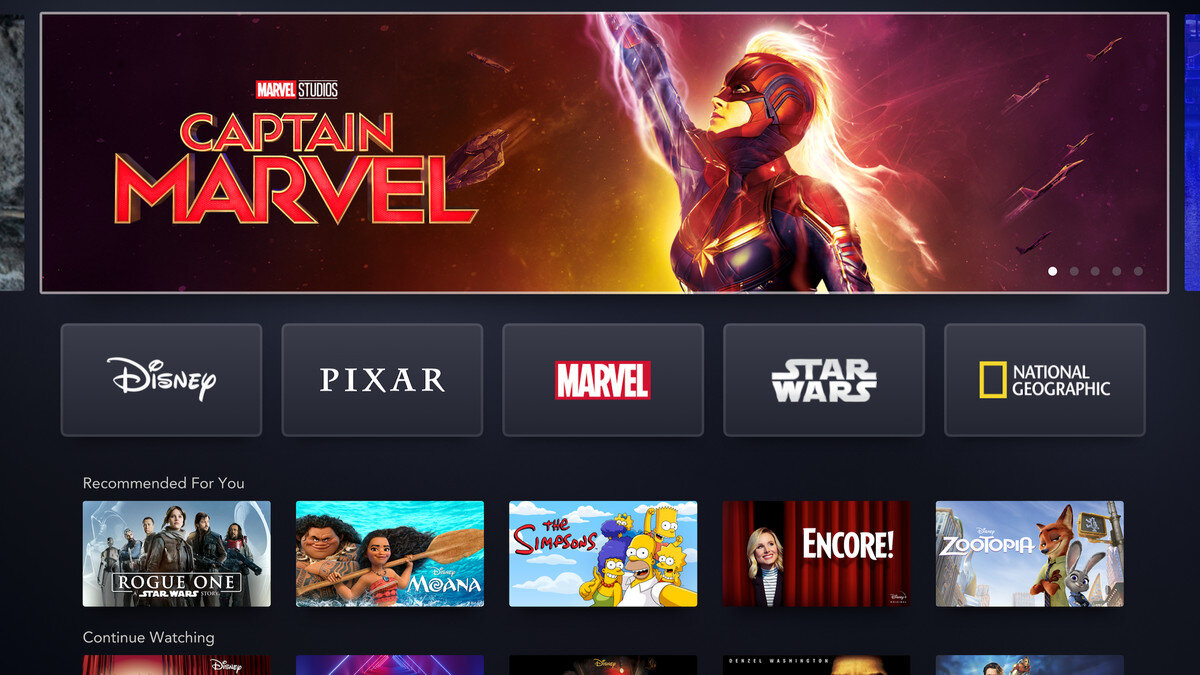
Image via Disney+

Image via Disney+

In what is becoming known as the Streaming Wars, big media and big tech are converging upon streaming video services as the new market for reaching consumers at scale. Four of the most valuable companies on the S&P 500 wil have launched new video streaming services by mid 2020 as billions of dollars are being spent to create original programming for new television shows and movies online.

The launch of Disney+ and Apple tv+ in November of this year has ushered in a new era for original content programming online, escalating competition with existing giants such as Netflix, the 800-pound gorilla in the room that has dominated online video streaming since its launch and garners over 158 million loyal subscriptions monthly; and Amazon Prime Video, HBO and Hulu. In addition, more players are also entering the increasingly crowded field — CBS All Access, NBC Universal and AT&T Warner Media’s new platform in beta that is expected to launch in 2020. In addition to these industry giants, there is a slew of smaller streaming services as well that serve niche audiences such as the Criterion Channel, Crunchyroll and Shudder. With so many consumer choices, it is no wonder that online video streaming is poised to overtake traditional TV by huge margins. In some respects, 2019 may be the last year of television as we know it, given the range of streaming video options now available at such scale, attracting A-list talent and original storytelling. With so many choices available, this period is now being called the “golden age of television.”

Let’s take a closer look at the streaming services now available, their technology and consumer costs and how the streaming wars are radically and permanently altering the way media is being delivered and consumed.

Image via Yahoo! Finance

Image via Yahoo! Finance

The Contenders

Yahoo! Finance created this insightful infographic above. In addition to this, we have taken a closer look at some other streaming services in development and recently launched — CBS All Access, AT&T Warner Media and Peacock. Here’s our scorecard for video streaming services:

  • Apple tv+
    Price: $4.99/month or 1 year free with the purchase of a new iPhone, iPad or Mac or upgrading to iPhone 11
    Launch: Nov 1, Available now
    Offer: A-list “The Morning Show” drama starring Jennifer Aniston and Reese Witherspoon kicked off the new service. Apple is also offering a slew of original programming that includes new works by Steven Spielberg, Oprah Winfrey and more. You can also use the Apple TV app to subscribe to other streaming services.

  • Disney+:

    Price: $6.99/month or $12.99/month when bundled with Hulu and ESPN+
    Launch: Nov 12, Available now
    Offer: Disney’s entire vault including Star Wars, Marvel’s Avengers, new Star Wars spin-offs such as “The Mandalorian,” Pixar, National Geographic, “The Simpsons.” With its treasure trove of childhood favorites, Disney+ is bound to win over parents, just to give their children access to Disney, Pixar, and LucasFilm movies. Disney also has a deal with Verizon where Verizon Wireless Unlimited data subscribers and new Fios subscribers have 1 year free access to Disney+.

  • Netflix

    Price: $8.99/month for the basic plan, $12.99/month for the standard plan and $15.99/month for the premium plan
    Launch: Available now

    Offer: First to arrive on the scene and boasting a massive international presence, Netflix is so ubiquitous that the company’s name serves as a verb for relaxation: “Netflix and chill.” Netflix has built a large, loyal subscriber base over the years by both licensing content from major industry players to creating its own. Popular original shows include “Stranger Things,” “The Crown” and “Orange is the New Black” to the Oscar-winning movie, “Roma.” More original shows than any other provider.

  • Amazon Prime

    Price: Free with Amazon Prime membership paid monthly at $12.99/month or annually at $119/year
    Launch: Available now
    Offer: Deep content library, Amazon Originals such as “Jack Ryan,” “Bosch,” “The Man in the High Castle” and a new online version of “Lord of the Rings” in development for $500 million. Amazon also has exclusive access to certain shows not available elsewhere such as “The Americans,” “Mr. Robot” and “Downton Abbey.”

  • Hulu

    Price: $11.99/month without ads or $5.99/month with ads
    Launch: Available already
    Offer: “The Handmaid’s Tale,” classic and popular shows such as “ER,” “Buffy the Vampire Slayer” and “The X-Files” and new shows in development. Hulu has 28 million existing subscribers.

  • CBS All Access

    Price: $9.99/month ad-free or $5.99/month with ads
    Launch: Available now
    Offer: Exclusive home of “Star Trek” and a new show, “Star Trek: Picard,” with Jean Luc Picard for Trek fans.

  • HBO Max

    Price: $14.99/month
    Launch: May 2020
    Offer: “Sopranos,” “Looney Tunes,” “Sesame Street,” “Game of Thrones,” “Prince of Bel Air” and “Friends” returning from Netflix as well as new shows by JJ Abrams, Greg Berlanti of CW’s “The Arrow” and Reese Witherspoon

  • AT&T Warner Media

    Price: TBD though it can be free through an ad-supported model for cable subscribers

    Launch: 2020
    Offer: Harry Potter and new shows yet to be announced

  • Peacock by NBC Universal

    Price: TBD though it can be free through an ad-supported model for cable subscribers
    Launch: April 2020
    Offer: "The Office,” "Parks and Recreation,” “30 Rock,” “Fast and Furious,” “SNL” and “Back to the Future” with new shows by DreamWorks Animation, Focus Features and Universal.


The Economics of Streaming

America has experienced tremendous investment periods from the early years of its founding such as the railroads and electricity to car manufacturing, the Industrial Revolution and the Internet. Today, that spectacular boom is happening in online video streaming with over $100 billion being invested in streaming services — similar to the oil industry two hundred years ago. In fact, the entertainment industry as a whole has invested over $650 billion in streaming services over the last few years — no small number! It’s evidence of a revolution underway in how people access and consume content in the 21st century. In many ways, this exponential growth has been building over years as numerous industries have been transformed, making digital sharing commonplace and required to appeal to the everyday consumer

For the Individual User and Family Household

The cost of access to a Disney+ subscription with its library of 7,500 titles at $6.99 a month is far less than the cost of a DVD. Streaming now offers access to large libraries of content at one flat monthly fee.

Access to so many streaming video subscriptions offers consumers many options today and will affect people differently depending upon their current lifestyle, set up and individual or family household needs.

The average monthly bill spent on video streaming in 2019 is around $73, of which $60 goes to cable service and $13 to streaming services, according to research by Cowen &Co. Projected consumer spending is expected to only grow to $76 by 2024. For family households that intend to keep their existing cable services, they may just to add on streaming services that they want such as Netflix and watching shows on YouTube. They may not add new streaming services.

To some degree, it depends upon how much the individual or family household is already paying, what type of access they have and what they like to watch. Roughly 70 percent of Americans today subscribe to at least one type of video streaming platform. A Wall Street Journal poll discovered that Americans surveyed would be willing to pay roughly $44 a month or for 3-4 streaming services.

Streaming services like Netflix with 158 million subscribers worldwide, have built cult followings for favorite shows such as “Stranger Things” that appeal to both cable TV subscribers and cordcutters. The platform’s popularity is not expected to disappear overnight as new streaming service platforms become available. Disney though is pulling its content from Netflix and bringing all of its entertainment home to its own mother ship, Disney+.

Ultimately, what an individual or family household chooses will be dependent upon a variety of costs such as a smart TV or Internet device, high-speed Internet plan and personal show favorites. One concern that streaming companies have about customers is shared passwords to reduce costs, thus eating into their margins. Apparently, there is some effort underway to prevent this, through regular password reset requirements and limiting how much access a person can have based on their physical locations.

Consumer Benefits:

  • Choice: Consumers have access to greater selection of content now through streaming video that may align more with their individual preferences and interests.

  • Higher quality: A lot of time and effort is being devoted to building out original programming for original shows on Netflix, Amazon Prime, Disney+, Apple tv+, HBO Go, Hulu and more. For any consumer frustrated with lackluster content on traditional TV channels or even cable networks, these new shows offer higher quality to some degree. Netflix offers original programming in multiple languages with voiceovers, which can introduce viewers to new stories and ideas.

  • On demand: Unlike the limitations of traditional TV shows where you need to tune in at a specific time to gain access to a show that was also available only for a limited period of time, streaming video subscriptions offer shows on demand when you want it, wherever you want it (portable) with prior episodes being accessible too.

  • Access to old favorites: Streaming video platforms such as Disney+ also offer content out of their vaults that consumers love but did not have access to online before as these shows were created prior to streaming services and available only on old DVDs and video cassette tapes. Disney and other content providers have remastered old favorites and brought them online. Popular TV reruns and classic shows have also reappeared and their value has only gone up over time as these platforms aim to keep their new subscribers engaged, according to the Wall Street Journal.


Who’s Got the Most To Lose?

Image via Yahoo! Finance

Image via Yahoo! Finance

Without a doubt, Netflix (NASDAQ: NFLX), one of the most profitable tech stocks in the last decade and part of the FAANG series of stocks (Facebook, Apple, Amazon, Netflix and Google), has the most to lose as the company has built its empire riding and driving the popularity of streaming worldwide. Ironically, it is because of Netflix’s enduring success that content creators who were once scared of doing online video streaming, decided to join it. As Netflix’s stock rose, it became impossible for traditional media companies to ignore it or the changing viewing habits of audiences.

As Disney pulls its content from Netflix, followed by AT&T that is offering a new video streaming service with Warner Media, NBC Universal and others may follow suit as they each develop their own platforms. Since Netflix surged in popularity and scale due to its access to licensed content, the company also has the most to lose.

Nonetheless, Netflix is expected to continue to be a dominant player as shows like “The Crown” and movies like Martin Scorsese’s The Irishman attract huge audiences. Netflix reported that The Irishman raked in over 26 million viewers within the first week of its launch, according to Variety.

Cable subscriptions can also be expected to decline. AT&T lost over 1 million cable customers in the third quarter of 2019. Cable companies thus are positioning themselves as Internet providers and thus charge more for premium Internet data streaming.


What Area Has the Most Growth Opportunity?

With so many video streaming platforms and original content, viewers have many options for what to see. Where then is the biggest growth opportunity apart from new content creation? The area for the largest growth in the industry lies with the actual devices that stream the services. What devices can stream video from Disney+, Amazon Prime, Hulu and more?

Is there a device that can stream all the video platforms well? From smart TVs to devices like Roku, devices that are well equipped to stream multiple video platforms smoothly and well, will be in hot demand.


Questions that Remain

Which services will persist and flourish? Which platforms will close up shop? How many subscriptions will an average American household have? How many subscriptions will international audiences have? How will these streaming wars affect movie production, theater attendance, awards and the film industry? 

These questions and more, still remain. There’s an ongoing debate and discussion about the streaming wars on Reddit, with predictions made about which streaming platforms will endure. Many expect Netflix to endure and continue to thrive, creating new content with ongoing equity investment while Disney and Amazon Prime continue to grow, building upon their existing arsenal of content and drawing from deep pockets.

Apple’s Bet

As a publicly traded stock, Apple (NASDAQ: AAPL) can continue to produce shows as long as the company’s leadership green lights it. The company has already committed to hundreds of millions in dollars in original content programming. Like Disney has a built-in audience with its long history of storytelling, popular favorites and theme parks, Apple also has a built-in advantage through its consumer products. The company has offered Apple tv+ free for the first year along with any purchase of a new Apple product. This also extends to upgrades if you upgraded your iPhone to the iPhone 11. This helps introduce more consumers to Apple tv+ and encourages them to explore the new shows. It also works the other way — as the offer of a year of free service can also get consumers to upgrade their iPhone, iPad or Mac.

Apple has approximately 1 billion customers around the world so if 10 percent became paying subscribers at the introductory $4.99 per month for the Apple tv+ streaming service, that would rake in $500 million in new revenue alone.

Sports Holdout

One area of cable subscriptions that has not yet been impacted by the shift to streaming video online is sport events. Major American sporting events are still carried by traditional TV networks. Watching the Super Bowl is an annual tradition on television that is not going anywhere yet. Netflix or any other video streaming platform has yet to duplicate a similar enthusiastic communal viewing experience hosting over 100 million people at the same time.

Amazon has made an indent into sports by acquiring rights to streaming regional sports networks, specifically for New York teams. Disney also owns the popular ESPN+ network that it launched earlier this year.


“Did You See It Last Night?”

By far, one of the biggest changes from the advent of the streaming video revolution is a shift in culture. For so many decades, tens of millions of Americans have watched the same show together on television all at the same time. Watching television has been a communal event since the 1940s. Fall TV show premieres in September marked the start of a new school season with matching ad campaigns. Everything was based around TV. The shows themselves developed certain formats to accommodate ads and commercials. Broadcasting in turn, happened all at once as companies followed a strict schedule of programming. Viewers could only see a new episode of a beloved show on a specific day at a particular time. There was also only limited viewing of prior episodes and seasons of any show.

With the arrival of Netflix and its surge in popularity, millions of people have reported watching the same show at the same time, although data algorithms provide different viewing experiences for different viewers. Watching shows can still be a communal event — just in a different way as media giants are now linking their intellectual property to streaming platforms and individual users can watch these shows on demand, delivered by data algorithms that pay attention to what you liked before in order to deliver more of what you enjoyed before.

The concept of time as it pertains to viewing shows is changing. Streaming video online through Netflix and new video platforms offers viewers the ability to watch any show at any time on demand. With shows available year round, they are less dependent on seasons. Ad campaigns also are shifting. Netflix, Disney+ and Apple tv+ all offer ad-free programming. Discussion about a show is also not limited to the day of release, though some hype and viral traffic can also be expected. Old episodes of popular shows such as “Seinfeld,” “Cheers,” “Friends” and “The Office” are available all the time and become popular again to new audiences, running alongside the latest episodes of contemporary shows such as “Riverdale,” “Flash,” “Modern Family” and more. Overall, there is also just more content available everywhere. To some extent, the way that streaming changes TV culture will depend ultimately on individual consumers’ watching and spending decisions.

We hope you enjoyed this in-depth review of streaming video services available today and arriving soon in 2020. Please let us know what you think at hello@elf.agency. Also, you can subscribe to our newsletter. Every week starting in 2020, we’ll have an in-depth review of one original streaming show on Apple tv+ or Disney+ on our blog with a minimum of 5-6 episodes available first before we review any show. Thank you and happy reading!