Contact Us

Have an inquiry? Please send us a message.


123 Street Avenue, City Town, 99999

(123) 555-6789

email@address.com


You can set your address, phone number, email and site description in the settings tab.
Link to read me page with more information.

News

News from Elf, a digital creative agency at the intersection of the arts and sciences.

iOS 12.1 Brings Group FaceTime, Over 70 New Emoji, Depth Control in Cameras and Dual SIMs

Elf

Apple Announced 4 New Features at its Brooklyn Event today with iOS 12.1 available for download today for iPhones and iPads

iOS-12.1-Emoji-FaceTime_group-facetime_10292018.jpg

The iOS 12.1 update is available on all eligible devices over-the-air via the Settings app. Access the free update by going to Settings > General > Software Update. Having your iPhone or iPad plugged into a power source is recommended.

Group FaceTime

With iOS 12.1, Apple offers Group FaceTime for up to 32 people simultaneously. You can easily add another person, use camera effects, join an existing FaceTime call and use Animoji and Memoji features. FaceTime now actually sizes a person’s image in relationship to how active the person is during the call, bringing prominent speakers to the forefront. You can also bring a person to the forefront with just a tap. Joining calls is not disruptive, and announced just by a simple ringless notification.

Group FaceTime integrates into the Messages apps so that you can start a chat right from iMessages. All FaceTime conversations remain private, whether one-to-one or with multiple individuals.


Image via Apple

Image via Apple

Apple embraced emojis early on, creating beautiful and simple images that have become widespread in use, replacing words and expressing emotions and moods in fun, creative ways. Back in November 2017, we featured Shigetaka Kurita in our Facebook series “100 Things We Love About Design” and “People You May or May Not Know.”

Emoji inventor Shigetaka Kurita

Emoji inventor Shigetaka Kurita

Back in 1995, while working at Docomo, a pager company in Japan, Kurita came up with the concept of 'emojis' that became instantly popular. Kurita also worked on 'i-mode' - the world's first mobile Internet platform that was quickly adopted in Japan and gave the country a 10-year headstart in technology over the rest of the world no less! 

An economics major himself, Kurita was not a designer but nonetheless put together a complete set of 176 12 pixel by 12 pixel characters to cover the entire range of human emotion!

As you can see, some of the emojis Kurita designed back in 1995 are still in use today!

Emojis by Shigetaka Kurita

Emojis by Shigetaka Kurita

Image via Apple

Image via Apple

Image via Apple

Image via Apple

Image via Apple

Image via Apple


Depth Control in Camera Preview

iOS 12.1 brings Depth Control in Camera Preview to iPhone XS, iPhone XS Max and iPhone XR. In earlier versions of iOS 12, Depth Control was only available for post-capture editing. Now you can use Depth Control to adjust the depth of field of your Portrait Mode photos before you capture them. To use this new feature when you create an image composition, tap on the ‘F’ icon at the top of the screen. Drag the slider to adjust the amount of background blur in the image. 


Dual SIM Support

iOS 12.1 also brings Dual SIM Support Comes to iPhone XS, iPhone XS Max and iPhone XR. This is an exciting feature for anyone who travels. You can now activate a cellular plan from a carrier without using a physical SIM card. This new feature is available through the existing physical SIM slot and the eSIM. This is available in all countries, except in China where new iPhones have two SIM card slots.
 

Apple Developing High Voltage Battery Power Converters Used for Sports Cars Similar to Porsche

Elf

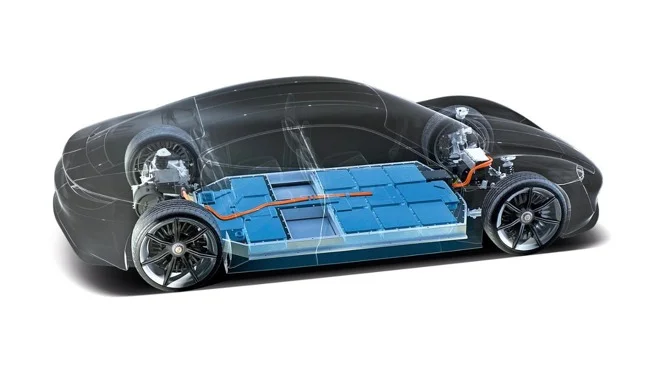
Apple has been working on ways to improve power transfer systems in electric vehicles, which could assist with running low power equipment inside cars, similar to Porsche and other electric car manufacturers.

Porsche’s Floor Battery, Image via Porsche

Porsche’s Floor Battery, Image via Porsche

As the electric car market heats up spurred on by Tesla’s push for widespread charging stations across the United States and worldwide, new models have been appearing in well known car manufacturers, known for precision engineering such as Daimler (owner of Mercedes Benz) and also newer players such as Faraday Future.


Apple’s Proposal for Converter Architecture

Apple has applied for a patent with the U.S. Patent and Trademark Office, published October 11th of this year for "Converter Architecture.” The patent explains how power from a high voltage source could be converted to a lower voltage, and how this can be used in automotive systems.

Both electric and hybrid vehicles are usually power by a high energy source such as a high voltage battery. This system powers the car’s initial movement and also powers internal components and systems ranging from the dashboard to air conditioning, battery controllers and infotainment. Converters that are typically used today are inefficient and vary in their electrical output. This could in turn, damage low voltage components.

Apple has proposed a solution to use an unregulated direct current (DC) converter changing the high energy source into a lower voltage. This in turn, is passed on to a second regulated DC converter that will regulate the vehicle’s voltage. In addition, a second lower-voltage power source like a battery could be connected to a regulated converter and recharged. If the power sent to the regulated converter is below acceptable thresholds, then the second power source will offer a supplemental power, thus ensuring that the vehicle can fully power all connected components. This proposal is intended to assist in the conversion of battery power for both buses and automotive vehicles that have electric vehicle power trains. 

Given the patent’s cited high voltage numbers of 800 volts (initial high source) to 48 volts (lower voltage for connected components), it can be expected that the patent is intended for high performance vehicles ranging from sports cars to buses. To put this voltage number in perspective, consider Tesla’s Model S, a luxury vehicle intended for consumers that is known for its initial fast acceleration. The Model S uses a battery voltage of 375 volts.

How and when Apple will use this system is not yet evident, although the company has also filed patents for sunroofs and headlight systems. Well known industry TF International Securities analyst Ming Chi-Kuo has predicted that Apple will come out with its own vehicle down the road, potentially between 2020 and 2025 with excellent integration of hardware, software and services. TF International Securities is a financial services group in the Asia-Pacific region. Ming Chi-Kuo regularly collects intelligence from his contacts in Apple's Asian supply chain, analyzes the data and compiles research notes for his investor clients. Ming Chi-Kuo has become well known as an Apple industry expert for his accurate assessments and predictions. Kuo predicts that a nw Apple Car would revolutionize the automobile market like the iPhone did in 2007.  

We expect that Apple Car, which will likely be launched in 2023–2025, will be the next star product. The reasons for this are as follows: (1) Potentially huge replacement demands are emerging in the auto sector because it is being redefined by new technologies. The case is the same as the smartphone sector 10 years ago; (2) Apple’s leading technology advantages (e.g. AR) would redefine cars and differentiate Apple Car from peers’ products; (3) Apple’s service will grow significantly by entering the huge car finance market via Apple Car, and (4) Apple can do a better integration of hardware, software, and service than current competitors in the consumer electronics sector and potential competitors in the auto sector.
— Ming Chi-Kuo, TF International Securities analyst

At Elf, we have been working on a variety of connected car innovations with our automotive clients since 2016. Some of these models are now coming to market at the start of 2019. We are excited about the future for automotive vehicles and how we can contribute in the best way to provide consumers with delightful, intuitive experiences.

EU Parliament Vote to Ban Single-Use Plastic Is A Victory for Oceans

Elf

In a landmark vote, the European Union Parliament voted for a complete ban on single-use plastic goods to stop ocean pollution.

Photo by Justin Hofman / Wildlife Photographer of the Year

Photo by Justin Hofman / Wildlife Photographer of the Year

With a 571-33 majority vote, the bill introduced by Frédérique Ries, passed with overwhelming approval and initiates a ban on single-use plastic goods ranging from cutlery and plates to straws, cotton buds, drink stirrers and balloon sticks. The ban also extends to a reduction in single-use plastic cups and food containers. The goal is to have the new legislation in effect throughout the European Union by 2021. The ruling will also effect the UK before the end of the Brexit transition. Additional plastic ban measures are already being incorporated in the UK and several EU countries.

Image via NOAA and BBC

Image via NOAA and BBC

Public concerns about ocean pollution have been growing, where the amount of plastic will outnumber fish, if plastic pollution continues at the same rate happening today. As much as eight million tons of plastic end up in oceans annually. More than 80 percent of all pollution in oceans comes from plastics.

After David Attenborough's BBC Blue Planet series aired, public support for plastic bans surged, leading to the proposed EU legislation in May of this year.

Plastics That are Banned

The new legislation targets common single-use plastic products that have been literally oceans for decades now and are also responsible for injuring ocean wildlife. Plastics spread quickly by traveling on ocean currents. While the plastics to be banned account for 150,000 tonnes of plastic annually in European waters alone, only a small fraction of the eight million tons of plastic entering ocean waters worldwide, the step is still significant as it prevents further pollution and encourages societal change. These ten common plastic objects account for 70 percent of plastic pollution entering European waters.

Image via EU Commission

Image via EU Commission

Banned items ranging from cotton buds to plastic straws and cutlery are also easily replaceable via cardboard containers, paper straws and reusable metal cutlery. Environmental damage caused by plastic pollution in Europe is estimated to cost 22 billion euros by 2030.

Image via BBC

Image via BBC


Effects on Marine Life

Plastic-in-Sea.jpg

Plastic in the ocean has a serious deleterious effect on marine life, killing fish and large aquatic mammals. Whales often eat plastic bags and are then unable to eat real food and thus die of suffocation and starvation.

Plastic breaks down in the water into smaller pieces or micro plastic and never completes decomposes. Instead, these micro fragments end up in fish and are consumed by other marine mammals, land mammals and human beings. The phenomenon of plastic pollution is widespread. Large amounts of plastic waste also wash up on beaches, where sea birds, turtles and other animals chew them and often die from poisoning and suffocation.

Starfish specimen

Starfish specimen

Deep Sea Creatures Ingest Plastic For Over 40 Years
New research by the Scottish Association for Marine Science (SAMS) in Oban published in Environmental Pollution, has led to the discovery of plastics such as polyester and nylon in the bodies of deep sea creatures for at least 40 years. Researchers examined animal specimens collected underwater at a depth of 6,561 feet or 2,000 meters in the Rockall Trough off the Western Isles in the northeast Atlantic Ocean. They found eight different types of plastic in over 48 percent of starfish, sea stars and brittle stars collected from 1976 to 2015.


The UK Plastics Pact (WRAP)


More than 40 companies have signed up a pact called the UK Plastics Pact by the sustainability group WRAP to eliminate single-use packaging via better design and manage the entire plastics value chain from supply to design, distribution, consumption and recycling to prevent plastic waste and pollution. The goal is to cut down plastic pollution drastically within the next seven years. Companies who have signed the pact include Coca-Cola and Asda as well as trade associations and branches of government. Together, these companies account for as much as 80 percent of all plastic packaging in UK supermarkets.

Consumer goods providers Procter & Gamble and Marks & Spencer, among others, have agreed to make all plastic packaging recyclable or compostable by 2025.

Promises made to reduce plastic pollution include:

  • Eliminating difficult or unnecessary single use plastic packaging through better design

  • Making 100% of plastic packaging reusable or recyclable or compostable

  • Ensuring 30% of plastic packaging is recyclable material

WRAP’s initiative is supported by the Ellen MacArthur Foundation, an organization that discovered that 95 percent of all plastic packaging is used only once.|

Single-use plastic is banned in several cities and areas of the world now.

The city of Coral Gables where our HQ is located, has already banned the use of single-use plastic bags. We’ve also taken some measures at Elf and will continue to improve as we learn. We welcome your comments and ideas. Thanks for reading!