Contact Us

Have an inquiry? Please send us a message.


123 Street Avenue, City Town, 99999

(123) 555-6789

email@address.com


You can set your address, phone number, email and site description in the settings tab.
Link to read me page with more information.

News

News from Elf, a digital creative agency at the intersection of the arts and sciences.

Filtering by Category: Industry Insight

Debunking Some Myths on Design Thinking

Elf

Design Thinking is a Popular Term Adopted Rapidly Today that is Often Misunderstood. Let’s Take a Closer Look.

Image by Anna McNaughty

Image by Anna McNaughty

How do you break down and explain the process of creativity?

‘Design thinking’ is a popular term today. It was first introduced into the mainstream by the San Francisco consultancy IDEO in the early 1990s to explain its methodology for solving problems when working with clients. The phrase itself comes from Carnegie Mellon professor and Nobel Prize Laureate Herbert Simon, who wanted to explain the process of human creativity systematically. Since that time, the phrase has been adapted, modified, and expanded to fit a variety of approaches and roles. Unfortunately, many misconceptions regarding this term and the actual work of designers have arisen. Here we address some of the primary ones.

Design thinking is a term first coined by Herbert Simon, a professor at Carnegie Mellon, in 1969 to attempt to explain the process of human creativity systematically.

Interestingly enough, Herbert Simon was not a designer and did not create any visual works. He, however, was a pioneer in artificial intelligence.

“What can a human being do that a computer cannot?” Simon examined questions like this. The term ‘design thinking’ naturally arose out of this process as Simon and other computer scientists aimed to harness the

power of individual human creativity, but still wanted the familiarity of a repeatable, proven process.


Myth #1 The design process can be done by people who cannot design.

This assumption offers an interesting dilemma. Today there are increasing numbers of private companies offering to teach ‘Design Thinking’ at the corporate level and for universities without actually including any design or creative input. They seem to be avoiding and circumventing the actual creative process. While having the gift of communication (oral and written) is admirable, teaching ‘design thinking’ as a self-sufficient design practice without hands-on work using prerequisite design skills is inadequate. That eliminates the majority of actual design, which is hands-on and requires excellent individual skill. In essence, such training teaches the theory without the practice. It is similar to offering you how to paint by just talking about the process of painting and never actually painting. Perhaps their customers would be better and more honestly served by offering to teach them the theory of design thinking since that is what they are offering.

Herbert Simon did not downplay the value of creativity or design skills. He just sought a way to bring the creative conceptual thinking behind design into work processes. Simon aimed to open up the design ‘thinking’ process to people who were not designers and who stayed away from non-linear, non-scientific methods. He tried to bridge the gap in understanding. Using a ‘design thinking’ approach enabled businesses and organizations to look at problems differently and thus propose different solutions.

Fact: ‘Design thinking’ process works if you have skilled designers guiding the process. You cannot just talk your way through design - you have to do it. Actual design work requires tremendous skill, precision, craftsmanship, and a keen awareness of composition, beauty, and balance.

The value in having a design thinking approach lies in bringing an awareness and understanding of the creative process, soliciting feedback, and making design more accessible to businesses.


Image by Elf art director, quote by Goethe

Image by Elf art director, quote by Goethe

Myth #2 Design thinking replaces actual design.

By far, this assumption about design thinking is the most dangerous and misleading. Design thinking as an approach helps in providing insight into the process. Design involves both a conceptual aspect and a physical action in creating and fine-tuning artwork. When the conceptual part involves software or digital design work, the work can benefit from feedback from other designers and other company members involved with customer engagement. This initial collaborative step helps bring all parties involved in the decision-making process on the same page. Thus all necessary feedback and relevant data are gathered to make the best, informed decisions. For example, with a product that you are selling to consumers, this process can help you discover unmet needs and learn where people are dissatisfied with using the current version of your product. Design thinking thus enables cooperation and collaboration in the first step of discovery and research into the problem you are solving. This brainstorming process is helpful, but only as an initial step.

There is considerably more effort involved to take the ‘brainstormed’ idea from conception to completion. The remaining steps involve excellent design skills, precision, and craftsmanship with many iterative, detailed cycles till final delivery. The act of creation itself is an original process unique to the individuals involved who draw upon their creative abilities and experiences.

Fact: While a ‘design thinking’ approach opens up the initial discovery process and can bring all parties (clients, partners, company staff, and stakeholders) to a common understanding of what is needed to design a solution, design thinking never replaces the original process of creation itself. People who lack essential design skills cannot complete the design process beyond the discovery phase. Thinking or talking about design does not replace design skill, precision, and craftsmanship. Design is an original process that requires fundamental design skills.

Design is an original process that requires actual design and craftsmanship skills.


What then is the value of design thinking?

'Design thinking' is a great way to help explain the value of design and solicit feedback from people at a company during the discovery process. It is a way of explaining the process involved to bring people together on the same page. It offers a way to provide a consistent approach for creating new products or services for businesses.

Explaining the value of design can often feel intangible and be hard to put into words. This dilemma prompted us to research the topic and explain design results in actual monetary terms and the value of design regarding the bottom line for businesses. This article has been shared over 3,700 times. The most important lesson that we take away from that research is how integrating design into business practice leads to creating better, intuitive products, services, and experiences for customers.

Design is about providing an excellent, intuitive, and empathetic customer experience. So how does your customer experience your product or service?

Design thinking helps bridge the gap in understanding that often accompanies the creative design process. It offers a way to provide a consistent approach for creating new products or services for businesses.

When you design thoughtfully, considering what your customers need and want, you will create better products, services, and experiences. 


Restoring the Night Watch: The Rijksmuseum Reimagines How the Public Interacts with Art

Elf

A Museum’s Quest for Perpetual Renewal Shows Its Deep Awareness of What People Love

Image via Rijksmuseum

Image via Rijksmuseum

Yesterday, the Rijksmuseum in Amsterdam announced that the public will be able to watch as The Night Watch, Dutch master painter Rembrandt’s celebrated masterpiece, is restored. The project is scheduled to begin in July 2019 and the entire process will be viewable in person at the museum and online.

The museum’s approach to sharing the painting’s restoration as it happens, reveals both a modern sensibility and a keen awareness of what people love. Recognizing that audiences today increasingly turn online for art, entertainment and culture, the museum’s leadership is willing to show the art restoration process as it happens.

Other masterpieces by Rembrandt Harmenszoon van Rijn, Marten Soolmans and Oopjen Coppit have already been restored. Restoring a masterpiece such as The Night Watch is no easy feat. The Rijksmuseum has enlisted the support of researchers, conservators and restorers both locally and all over the world to assist and thoroughly examine and restore the painting to its original full glory. The treatment plan includes imaging techniques, high-resolution photography and computer analysis. The museum could have chosen to close down the exhibit during the process. Instead, the museum has chosen to allow viewing both in person and online via a digital platform. The painting will be encased in a state-of-the-art clear glass chamber.

The painting’s restoration coincides with the 350th anniversary of Rembrandt’s death. The Rijksmuseum is bringing together a comprehensive collection of all of Rembrandt’s paintings, drawings and prints for the first time ever in 2019 in their exhibit “The Year of Rembrandt.”


The Night Watch, A National Treasure

Image via Rijksmuseum

Image via Rijksmuseum

The Night Watch is one of the most famous paintings in the world. It belongs to us all, and that is why we have decided to conduct the restoration within the museum itself – and everyone, wherever they are, will be able to follow the process online.
— Taco Dibbits, General Director, Rijksmuseum
Rembrandt Self-Portrait, 1660

Rembrandt Self-Portrait, 1660

One of the most beloved exhibits by far is The Night Watch, showcased at the Rijksmuseum in a special Gallery of Honor. Considered the national treasure, The Night Watch is an oil painting created by Dutch master painter Rembrandt Harmenszoon van Rijn. The mayor of Amsterdam, Frans Banninck Cocq, commissioned the painting in 1642 to depict his shooting company. The mayor was also the leader of the civic guard of Amsterdam. The painting depicts officers under the command of Captain Frans Banninck Cocq and Lieutenant Willem van Ruytenburch. It is Rembrandt’s only painting of military personnel and is striking for its bold depiction with officers in motion as compared to seated and static poses typical of the period. The large painting, measuring 11 feet by 14 feet, is striking and innovative in comparison to works by Rembrandt’s peers. The updated gallery exhibit now showcases other artworks of the time period in sharp contrast.

The museum first opened in 1800 in the Hague and then moved to Amsterdam eight years later. in 1885, a new principal Rijksmuseum building designed around The Night Watch by architect Pierre Cuyper opened. The only painting returned to its original location in the Gallery of Honor in the Rijksmuseum after the museum’s extensive ten-year renovation, The Night Watch is treated with such reverence, akin to an altar with its own cathedral-like entrance and stained glass and wall decorations. The painting also has its own escape slide created in 1934 to help quickly remove the painting in case of an emergency.

Image via Rijksmuseum

Image via Rijksmuseum

In addition to works by Rembrandt, the Rijksmuseum also contains artworks by other famous Dutch Golden Age painters such as Johannes Vermeer and Frans Hais. The museum also houses over 8,000 works of art and history and over one million objects from 1200 to 2000. Vermeer was famous for his use of bright pigments that were rare and expensive at the time such as ultramarine in The Milkmaid, madder lake in Christ in the house of Martha and Mary, vermillion, ochre, lead-tin-yellow, bone black and azurite.

The Milkmaid by Johannes Vermeer

The Milkmaid by Johannes Vermeer


Creating Memorable, Personal Experiences

Image via Rijksmuseum

Image via Rijksmuseum

How do we craft narratives that will resonate with our visitors on a personal level?
— Taco Dibbits, General Director, Rijksmuseum

The Rijksmuseum, a Dutch national art museum that was intended to house outstanding works of art by Dutch painters and visual artists, when it was inaugurated over two hundred years ago, quietly slipped into oblivion like many other museums across the world as modern buildings and office spaces competed for attention by the end of the twentieth century. However, concerted efforts by the Dutch government, the city of Amsterdam and corporate sponsors, helped revitalize the institution by offering a complete transformation of the museum. This effort spanned ten years. In 2013, a transformed Rijksmuseum opened its doors to the public, revealing beautiful spaces with redesigned modern galleries that carefully and lovingly showcased artworks with historical context for each era.

Image via Rijksmuseum

Image via Rijksmuseum

By creating a new chronological path for each century’s artwork, the museum was able to link art and history effectively, thus truly becoming a national museum that reflected Dutch history and culture, while offering visitors a clear sense of time and beauty. This new focus on how an individual experiences walking through the museum and interacting with exhibits, transformed visitor experiences and ignited interest worldwide. Since then, the Rijksmuseum has attracted over 2.5 million visitors annually.

Reimagining public spaces tied to national history while remaining culturally relevant in modern times, takes considerable effort. The Rijksmuseum’s leadership and staff has demonstrated how to do this elegantly with keen observations of modern culture and technology by cultivating an open mind and inviting collaboration and new perspectives, while keeping a sense of curiosity about the world.

Smartphone Users Use Devices More like Computers Than Phones, Study Reveals

Elf

Report by Counterpoint Research Reveals that Over Half of All Users Surveyed, Spend More than 5 Hours a Day on Smartphones

Counterpoint Research compiled global insights by pulling data from an extensive survey of 3,500 smartphone users aged 15-45 across the globe to better understand mobile user behavior, patterns, preferences and factors that influence purchasing decisions. Today, approximately half the world’s total population (7.6 billion users) uses smartphones. Annual spending exceeded $370 billon in 2017.

Time Spent Daily Using Smartphones

Since its introduction in 2007, the iPhone changed how users interacted with their phones and helped integrate varied, desired functionality into one device such as browsing the Internet, composing emails, taking photographs, sending text messages, making phone calls and playing games. Unlike prior smartphones where users still used the devices primarily for making phone calls, iPhones opened up opportunities for more computing and actual work functionality. Fast forward to today, smartphone users of both iPhones and other devices, use their smartphones for mobile computing activities primarily. Many dedicated users run businesses on their phones. Others consume digital content for hours.

Mobile User Behavior


The iPhone Brought Powerful Desktop Computing to A Small Screen

These consumer trends in many ways mirror Apple’s own foray into the smartphone world where the initial iPhone product in 2007 brought powerful desktop computing features into a portable, small device, including WiFi networking but was not necessarily the best mobile telephone at the time, given restrictions with carriers, shorter battery life and lagging in the trend in the next few years towards 3G and 4G Lite. However, the iPhone introduced the concept of apps to the world beyond computing professionals through the launch of the App Store and allowing third-party software to run code on iPhone devices. This sparked a tremendous revolution across industries, spurring innovation and new ideas, as well as offering developers the opportunity to create software on their own terms. Games were among the most popular apps initially and the quality of games on the iPhone was far superior to any other existing platform at the time because of the larger screen, graphics capability and computing power. Eleven years later, this dominance is still prevalent, although other platforms have also significantly improved and providing excellent mobile experiences. Other phone platforms such as Microsoft’s Windows Mobile were unable to compete after the launch of the iPhone as they failed to provide an enjoyable mobile user experience and functionality.

How the laptop combined the functionality of numerous office devices and applications

How the laptop combined the functionality of numerous office devices and applications

Essential laptop functionality is now available on your iPhone and other smartphones

Essential laptop functionality is now available on your iPhone and other smartphones

Today, you can walk on any street in practically any neighborhood in the world and see a smartphone user engaging with content on their mobile device with focused attention. Smartphones are ubiquitous and offer consumers independence to search for information themselves, communicate directly wherever they are, work or entertain themselves.

Image via Apple

Image via Apple


Preference for Mobile Sophistication and Ease of Use

The iPhone offered a smoother mobile browsing experience than any preceding smartphone when it launched. With the use of Notifications, the iPhone helped introduce users to simplified, faster communication updates, that Apple then rolled out to other mobile devices such as the iPad and for the Apple Watch, which does not use an independent web browser, but relies solely on apps.

Image via Apple

Image via Apple

This conscious choice by Apple to provide a simplified and distinct mobile computing experience helped win consumer loyalty due to an enhanced and enjoyable user experience. This was in sharp contrast to Microsoft’s effort to scale down its Windows PC platform to a mobile device through all of its iterations from Windows Mobile to Windows Phone, Window’s RT tablets and detachables. Despite its initial success with Surface, Microsoft has been unable to grow sales beyond a million devices per quarter - the same sales numbers the company garnered from a decade prior.

Google, on the other hand, succeeded in making the Android platform attractive to smartphone users by offering similar features to the iPhone. However, Google’s mobile computing efforts lag behind the iOS ecosystem for several reasons ranging from cybersecurity to providing streamlined mobile web browsing, lack of customization options, lack of development tools and by being very slow to attract and retain popular, exclusive games.

Smartphone users are looking for greater sophistication in their mobile devices and are thus willing to pay more for premium devices.


Demand for a Higher Quality, More Sophisticated Mobile Platform

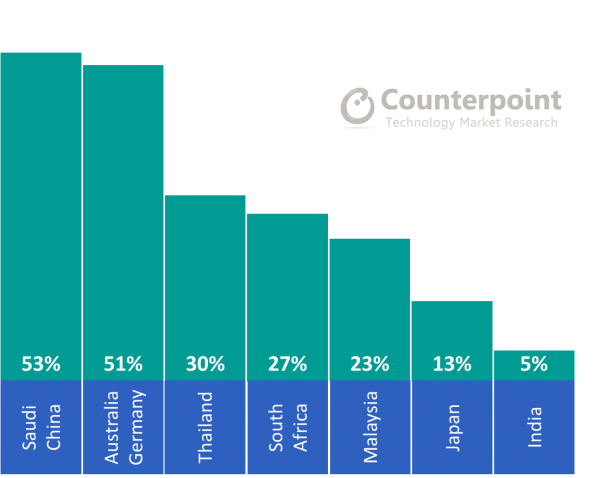
The report revealed that more than half of the Australian, Chinese, German and Saudi smartphone users are willing to spend more than US$400 to replace their current devices. Apple also dominated the user base in both Germany and Australia with as many as 85% of users insisting on brand loyalty.

Japanese users were less willing to spend more than $400 on new devices, despite Apple being the most popular smartphone brand in their country. This trend in Japan reflects cultural preference as Japanese consumers tend to be more conservative than consumers in other countries.

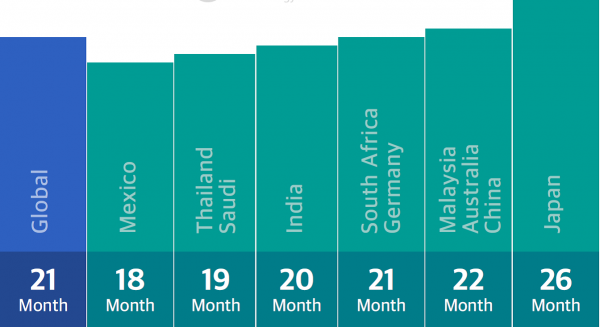
Also Japanese consumers tend to buy higher priced models and hold on to them longer (average of 26 months) as compared to Mexican consumers for example, that have the shortest life cycle of smartphones (average of 18 months or less). Over one-third of all Mexican consumers however purchase used smartphones. The smartphone replacement cycle has shortened significantly due to developing markets, which is also spurred on by the rise of newer Chinese brands that provide higher quality models at affordable prices than previously available. The report also revealed that as high as two out of three mobile users in India intend to upgrade to a newer phone within the next twelve months.


Shorter Smartphone Use Cycle Worldwide

The report revealed that Apple was in the top three most sought out brands for purchase for all respondents. Roughly 50% of all survey respondents in developed countries also subscribe to digital streaming services, with Netflix in use by 30% of Australian users and 40% of German respondents using Amazon Prime.

Image via Apple

Image via Apple

In addition, digital payment methods are increasing in popularity worldwide, particularly in China (AliPay and WeChat) and Thailand (True Money). This is due to their ease of use and ability to override gaps in financial infrastructure for many developing markets.