Contact Us

Have an inquiry? Please send us a message.


123 Street Avenue, City Town, 99999

(123) 555-6789

email@address.com


You can set your address, phone number, email and site description in the settings tab.
Link to read me page with more information.

News

News from Elf, a digital creative agency at the intersection of the arts and sciences.

How Amazon's Purchase of Whole Foods Is Poised to Reinvent the American Retail Landscape

Elf

Amazon’s $13.7 billion dollar purchase of Whole Foods earlier in August offers unprecedented vertical integration in one of the largest industries in the country - grocery shopping.

whole-foods-amazon.jpg

Amazon's recent acquisition of Whole Foods surprised many and put grocery chains on alert. Why would the e-commerce giant spend $13.7 billion to acquire Whole Foods' 460 brick and mortar stores while slashing prices? The answer lies in Amazon's expansion into grocery retail, the largest category of consumer retail and the biggest untapped market for Amazon. Getting Whole Foods grocery store customers offers Amazon access to a larger retail market with persistent demand and access to a wealth of data to inform its expansion. It's clear Amazon believes that the future of grocery shopping lies online.

By slashing Whole Food prices by as much as 43%, Amazon can offer healthier food options affordably to larger markets in areas typically dominated by grocery supermarket chains like Kroger, Walmart and more. Supermarket chains lost $12 billion in value after Amazon's announcement to slash Whole Food prices. The grocery stores had already taken a massive hit after Amazon's purchase of Whole Foods was made public.

As Amazon acquires new Whole Food customers, the company also expands its core business based on free delivery services through Amazon Prime. Amazon Prime is a popular subscription option for just $10.99/month or $99 for the year and in use by 80 million Americans annually, according to 2017 data estimates by the Consumer Intelligence Research Partners (CIRP) firm. Amazon announced that Amazon Prime will become the customer rewards program for Whole Foods customers, thus giving special savings and in-store benefits to Prime members. Amazon hopes to convert Whole Food customers into Amazon Prime members.  In essence, the company has found a way to vertically integrate consumption. How many companies do you know that offer you options to buy the latest book you want to read, watch movies for free (through your Amazon Prime subscription), send a gift to a family member, order groceries and buy clothing, home appliances and technology products all on the same site? 


Anticipating Grocery Needs and Desires via Access to Consumer Data and Insight

Your purchase habits and even browsing history are not going unnoticed. Amazon already uses that information to help provide you with better recommendations for products you may want to have right away or later. Amazon is arguably the world’s greatest organizer of consumer data - both purchasing and intent - already. Adding fresh groceries and the power of a well established brand such as Whole Foods, offers a whole new level for the technology giant to compete at and a segway into the $800 billion dollar annual food and beverage marketplace.

Amazon is already masterful in providing useful recommendations. These recommendations can now extend to your grocery shopping, including replenishing supplies when low or finding and ordering groceries for recipes on the go or using Alexa. Since Amazon already remembers your purchasing history so well, you can benefit from discounts, coupons and other privileges that you do not have to the same degree with your local grocery store. This incentive in turn, encourages you to shop more with Amazon online, enjoying both convenience and better pricing. For Amazon, this leads to more customers, greater customer retention and a longer, more rewarding customer lifecycle.

Purchasing Whole Foods helps Amazon gain even more data, specific to grocery shopping. Amazon's mastery of how to leverage data is already apparent in its booming e-commerce business. Access to Whole Foods' customer data will help Amazon better understand the needs of customers, predict new behavior and create a long-lasting, loyal customer base.
 

Amazon_Whole_Foods.png

Whole Food data helps Amazon understand the grocery buying habits, patterns and preferences of customers. This insight adds to Amazon's ability to see the connections between different product purchases across categories. All of this data in turn, provides more insight into the needs and wants of customers.

Grocery shopping is something most people do every week. Unlike e-commerce products such as technology or apparel, grocery shopping is essential, frequent and also habitual. This kind of insight into consumers is very valuable as it enables Amazon to tailor individual grocery shopping experiences. Amazon can also upsell other products like it is already doing at Whole Food stores by offering Amazon Echo products right next to fresh produce. While selling technology products next to grocery store items may not be easy at a local grocery store, this combination and others may grow in popularity now through Amazon.

Existing Whole Foods customers also are considerably more affluent than shoppers at other grocery stores, with $1000/month available in discretionary income on average, according to Business Insider. Upselling new products is a natural next step, as well as offering convenient delivery services same day through Prime Now or in the next two to three days via Amazon Prime.

From a customer's point of view, Amazon's purchase of Whole Foods offers convenience. For example, if a customer just finished a favorite snack or grocery staple, Amazon will then remind the person to buy more right when he or she needs it. With just a click of a button, you can have it delivered to your doorstep - no driving, no fuss.


Photo of Whole Foods CEO John Mackey via AP

Photo of Whole Foods CEO John Mackey via AP

Disrupting Existing Grocery Store Chains

How will Amazon's purchase of Whole Foods and expansion across the country, change existing grocery store chains? While the full extent of Amazon's entry into the retail grocery store marketplace remains to be seen, some changes can be predicted. Existing stores and big grocery chain giants such as Kroger, Costco and Walmart will have to compete with Amazon's known brand quality assurance and speed as well as ability to offer lower prices. 

Amazon is known for its swift, easy and personalized shopping experience. With just a click of a few buttons, you have ordered what you wanted, discovered a few things along the way and got the best prices and quickest delivery. 

Why would you want to shop anywhere else?

Grocery stores may slash prices in certain categories and items to keep pace with their new rival. They may also go out of business if they cannot adapt quickly enough or are unable to recognize the areas that they can excel in and dominate.

In other industry sectors, Amazon already owns several brands of its own, particularly in apparel such as Lark & Ro, Ella Moon and Ma and others and even its own movies such as Manchester by the Sea. Companies like Kohl were forced to adapt quickly by creating their own private labels - basically their own differentiated product - so that they could survive and thrive. After numerous mishaps, Kohl's private brand now accounts for 50 percent of all of its sales.

Grocery stores may also have to adapt in a similar fashion by providing more groceries with their own brands that their customers love.

In the immediate interim, customers can still continue to shop right at the 460 Whole Food stores available in 42 states that now fall within the Amazon family. In some respects, this will help customers who may be reticent about buying groceries online to keep purchasing at their favorites stores - just at more affordable pricing and with better discounts and access to other products via Amazon.

Accelerating Food Delivery Services to Your Home

Food delivery via Amazon is already a popular service, whether done online or via the mobile app. With the ability to order groceries now and also have same or next day delivery, Amazon is now a top competitor for providing groceries - something you need every week. The company still offers its personalized, speedy and secure checkout process online, which in many ways, is better than a direct purchase within a store. 

A customer can also stay on budget, buy just from a pre-planned shopping list and place orders quickly without waiting in long lines or trying to find a parking spot in a crowded grocery store parking lot after work.

Lower Prices and Access to Healthier Food More Affordably

One of the biggest arguments for a person to continue to shop at any given grocery store is the cost of food. Buying locally often saved the customer money as there was no shipping cost involved. There may be a cost for traveling to and from the store. Purchasing healthier food typically involves higher costs. Healthier food is often more expensive than versions filling most grocery aisles today that are loaded with saturated fats, GMO, high fructose corn syrup and synthetic ingredients that are hard to pronounce. Even as public education about nutrition and food quality has improved, cost has remained a significant barrier to buying healthy food.

Amazon did not delay in taking action to address this. Within just three days of the FTC approving Amazon's purchase of Whole Foods and its first day as new owner, Amazon slashed prices by as much as 43 percent! While some products remained the same, there were significant changes to prices on popular and quickly consumed foods such as bananas, eggs, avocados, chicken, beef, salmon and more.

Pricing was formerly a barrier to entry for new customers at Whole Foods and Amazon's lowered pricing has had an immediate positive effect for consumers while disrupting the food retail industry.

Amazon's bold move offers a way for consumers to have access to healthier foods more affordably. It also forces food retailers to adapt quickly and come up with more effective pricing strategies.
 

Photo via Whole Foods on Facebook

Photo via Whole Foods on Facebook

Changing the Suburban and Strip Mall Landscape

Without a doubt, Amazon's foray into the grocery store marketplace will have a tremendous impact upon the industry. But its reach extends beyond just brick and mortar grocery stores to their environments. Many grocery stores are in suburbs or in strip malls. As customers buy more groceries online, they will be less likely to spend their time in strip malls. There will be fewer physical grocery stores, just like the disappearance of bookstores over time after Amazon changed the way people discover and buy books.

Maybe former strip malls and grocery stores will be converted into distribution centers or fulfillment centers. Recently, Amazon filed a patent application for drone towers in city centers. These drone towers will have their own warehouses and loading docks. 
 

Amazon Will Have to Grow Its Own Distribution Networks

Finally, in addition to its effect on grocery chains, Amazon's purchase of Whole Foods will also require that the company build better distribution networks across the country. As Amazon builds this and supplies customers with fresh groceries, recommended items and other products on their wish lists, food retailers across the country will also have to adapt in providing speedy delivery and high quality products at lower prices.

In conclusion, Amazon has raised the bar in terms of convenience and affordability and in anticipating consumer needs and desires with its vertically integrated, swift shopping experience personalized to each customer. At the very least, customer grocery store shopping experiences will improve. We can expect savvier shoppers and hopefully, healthier ones too.

How will the American retail landscape look in the years to come? While the answer remains to be seen, we would love to see some of these strip mall areas and former grocery stores turned into parks and community green spaces.


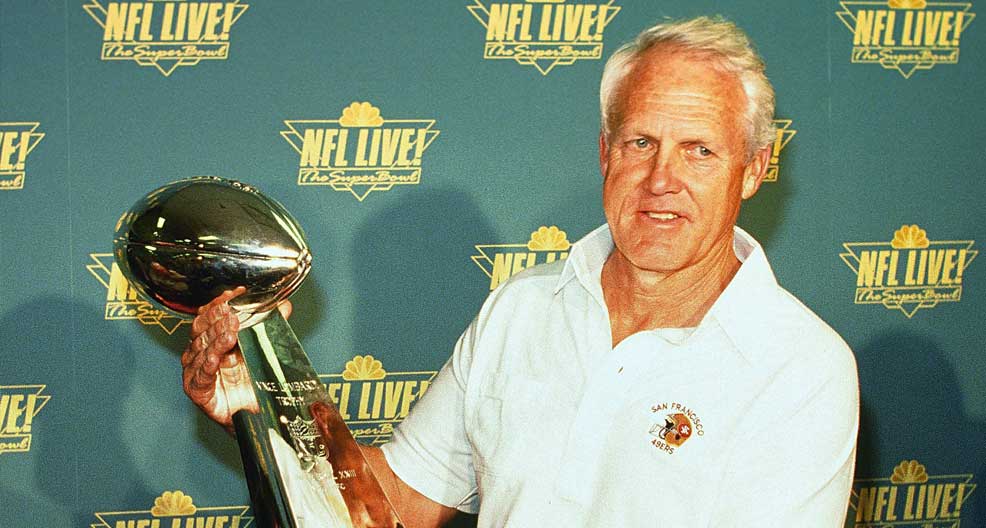
Profile: Leadership and Team-Building Insight from Bill Walsh, Former Football Coach of the San Francisco 49ers

Elf

Inheriting a team that had gone 2-14 in the previous season, Bill Walsh led the 49ers to win their first Super Bowl in 18 months, and then on to win another 4 Super Bowls in the next 14 years. Amazing, isn't it? Let's take a closer look.

Joe Montana (left), Bill Walsh (center) and Dwight Clark (right) at the 1982 Super Bowl

Joe Montana (left), Bill Walsh (center) and Dwight Clark (right) at the 1982 Super Bowl

Bill Walsh was one of the finest coaches in NFL history. His teaching style, strategy and team-building culture have been studied at top business schools and inspired coaches that succeeded him. Bill differed from coaches of his time known for their aggressive, physical approach to playing the game. In fact, when he began, he was mocked for his more thoughtful and cerebral approach where he focused on details of the game. Bill was unpretentious and soft-spoken. He was creative, analytical and very knowledgeable with a strong self-assurance that was never cocky, but just confident and aware. He had a great eye for talent, from quarterbacks Joe Montana and Steve Young to receiver Jerry Rice and many more - including talent that was overlooked, undervalued or just new and often, under-appreciated.

Here we take a closer look at Bill Walsh's remarkable leadership insight and hard-won experience gleaned from his noteworthy book The Score Takes Care of Itself in ten valuable lessons below.


1. Create an Environment of Excellence First

Just like the title of his book The Score Takes Care of Itself suggests, Bill Walsh emphasized creating a culture where excellence thrives and is expected. Winning came second. Raising standards and creating an environment of high performance and professional conduct came first.

At 49, Bill took over coaching of the San Francisco 49ers after a two-year stint as Stanford's head coach where he brought the team to a win in the Bluebonnet Bowl. Bill's passion and commitment to coaching was evident in his early career but came under national attention when he took charge of the lagging 49ers and led them to consistent wins and a winning mindset that carried on to the coaches that he mentored.

Instead of focusing on the score like so many other teams and coaches before him had done, Bill laser focused the concentration of his 49ers team on improving their performance in the field and throughout the organization. 

Bill did this by hiring the best talent he could, teaching them his Standard of Performance and uniting the whole franchise from the quarterbacks to the secretaries to thinking of themselves as a team with ownership over both performance and results. 

Bill called this new winning culture, his "Standard of Performance," a different way of thinking and acting - that was based on high standards, strong work ethic and a commitment to being first-class in action, approach and mindset.

Photo via ESPN

Photo via ESPN

I came to the San Francisco 49ers with a specific goal - to implement what I call the Standard of Performance. It was a way of doing things, a leadership philosophy, that has as much to do with core values, principles, and ideals as with blocking, tackling, and passing; more to do with the mental than with the physical.
— Bill Walsh, The Score Takes Care of Itself

Bill was interested in cultivating an inventory of skills - both in attitude and in physical behavior - that would lead to better execution. Taking over a losing team was undoubtedly difficult but unlike many others who focused on immediate wins, Bill emphasized improvement throughout the 49ers and directed everyone involved to focus and even obsess over the details and quality of execution as well as their own attitudes and actions. He believed winning would take care of itself.

a) Hiring

In terms of hiring, Bill aimed to hire what he considered the best personnel with four major characteristics: talent, character, functional intelligence (able to think on your feet) and eagerness to adopt Bill's new approach. He also looked for intelligence, a willingness to work with others in a team and a keen interest to contribute to the 49ers.

His goal was to hire the best and teach them what he thought was high performance. Along the way, Bill also had to let go of individuals who did not maintain the same high standards, challenged authority or were unwilling to grow.

Photo of Joe Montana (L) and Bill Walsh (R) discussing strategy mid-game via the NFL

Photo of Joe Montana (L) and Bill Walsh (R) discussing strategy mid-game via the NFL

b) Standard of Performance
 

For me, the road had been rocky at times, triumphant too, but along the way I had never wavered in my dedication to installing - teaching - those actions and attitudes I believed would create a great team, a superior organization. I knew that if I achieved that, the score would take care of itself.
— Bill Walsh

Bill's ethics and standards were epitomized in his Standard of Performance, a list of guidelines he had put together to structure the organization and to create a culture of high performance. It was in many ways his life's work and his personal standards that he taught as the coach of the 49ers to his team and the entire organization.

Through this process, Bill put everyone on the same page in terms of professionalism and expectations. He then explained how to achieve these high standards through detailed lists and explaining what he wanted each individual to accomplish. He laid out the details of perfecting performance, no matter what role the person played in the success of the 49ers. Bill's focus was on continuous improvement and raising standards for everyone in his organization and for the team as a whole, instead of just winning alone.

As the new coach of the 49ers, Bill went to work immediately to create a Culture of Success where high standards were the norm and everyone was expected to bring their A game, work hard, plan, prepare, master the details and perform consistently better. He led by example by modeling the behavior he wanted to see in his employees and in his athletes. Bill communicated often, taught and explained every detail thoroughly one-on-one as needed and praised generously.

The right culture for his team was fundamental to lasting success. Bill knew this and that he would have to demonstrate his values through his own behavior on a daily basis. He had to be willing also to enforce the expectations and standards for how his new program would work, from the details of how the athletes would train, practice and compete, to how they would behave on and off the field, win, lose and lead. 

Creating the right team culture is essential. Communicating what this means for your organization, implementing it through standards and expectations, and then sustaining it successfully, drives lasting success and victory.

The culture precedes positive results. It doesn’t get tacked on as an afterthought on your way to the victory stand. Champions behave like champions before they’re champions: they have a winning standard of performance before they are winners.
— Bill Walsh

Implementing the culture you desire for your team takes time. There will be those who refuse to accept your new standards and you have to be willing to confront and remove them if needed, despite the level of talent or time invested. Bill's example demonstrated that persistence is key. Building a successful team culture takes time, hard work and a positive mindset. Over time, this culture attracts the talent, resources and support that you will need to succeed. 
 

Bill's Standard of Performance:

  • Exhibit a ferocious and intelligently applied work ethic directed at continual improvement

  • Demonstrate respect for each person in the organization

  • Be deeply committed to learning and teaching

  • Be fair

  • Demonstrate character

  • Honor the direct connection between details and improvement, relentlessly seek the latter

  • Show self-control, especially under pressure

  • Demonstrate and prize loyalty

  • Use positive language and have a positive attitude

  • Take pride in my effort as an entity separate from the result of that effort

  • Be willing to go the extra distance for the organization

  • Deal appropriately with victory and defeat, adulation and humiliation

  • Promote internal communication that is both open and substantive

  • Seek poise in myself and those I lead

  • Put the team’s welfare and priorities ahead of my own

  • Maintain an ongoing level of concentration and focus that is abnormally high

  • Make sacrifice and commitment the organization’s trademark

Bill Walsh hoisted up on the shoulders of his team, when the San Francisco 49ers defeated Miami, 38-16, in Super Bowl XIX in 1985

Bill Walsh hoisted up on the shoulders of his team, when the San Francisco 49ers defeated Miami, 38-16, in Super Bowl XIX in 1985

Bill succeeded in setting a high professional standard for the 49ers, a football franchise that went from being considered the worst in the league to Super Bowl Champions. Instead of focusing on the win, Bill and his team focused on mastering all the details that led up to the game and the process, rather than the win itself. This could range from an athlete spending an extra hour lifting weights or a quarterback perfecting technique on the field again and again. The 49ers exemplified this mindset.

c) Ownership:

Bill emphasized individual ownership for everyone involved with the 49ers, regardless of the capacity that they worked in. He put the team first, where they were united and accountable for both winning and losing. Victory and defeat belonged to everyone.

Consistent winning for a sports franchise requires a strong, positive team mentality and excellent leadership. Bill knew this and also that the team could not consist of individual rockstars or contractors for their own interest, but had to be a united team with connection and extension.

We are united and fight as one; we win or lose as one.
— Bill Walsh

A great example of the kind of deep connection and loyalty that a strong team engenders can be seen at times in organizations like the military where individuals are willing to go the extra mile and sacrifice. Any organization that inspires such loyalty has achieved this sense of connection and extension. Bill wanted his team to also have the camaraderie and loyalty of a united, cohesive team that worked together as one unit.

Initially as Bill was getting his team and the entire 49ers organization to work together cohesively and adopt his new Standard of Performance, there were naysayers and individuals who criticized his approach and blamed others for mistakes and losses they faced. Bill would not allow this behavior of blame and scapegoating. He emphasized collective ownership and accountability as well as ethical, fair and constructive behavior in the locker room, on and off the field and behind the scenes.


2. Demonstrate Work Ethic and Set the Tone

The leader sets the tone of an organization. Bill Walsh knew this and exemplified this in his organization by modeling the behavior he wanted his team and staff to exhibit. Work ethic was paramount to him. He knew that by demonstrating his own devotion to work, that his team and people would see directly what he expected of them. People looked up to him as a role model from commitment to work ethic, decision making, methodology and management. 

View Wired for Sound highlights from the San Francisco 49ers on YouTube.


3. Teach, Encourage and Praise

The ability to help the people around me self-actualize their goals underlines the single aspect of my abilities and the label that I value most - teacher.
— Bill Walsh

You might think that with high standards that Bill would have been very tough on his team when they failed to meet expectations. He wasn't. Bill would just come over to the player with the correction of what was wrong and how to do it right. He did not get upset but just kept teaching all the details, no matter how small, of how to perfect performance.

Teaching was a top priority for Bill. He taught the San Francisco 49ers to want to be perfect and unleashed a hunger for improvement and becoming better. Bill loved teaching and he showed his eagerness and passion for football in his teaching. His enthusiasm was contagious and motivated his team.

Bill praised his team and individuals when they did well. He was always appreciative and supportive. He would remind players of their abilities. Bill taught each individual player the details of high performance so the player could go out and achieve it. He turned his players into great students.

Unlike other coaches that pushed their teams very hard on Wednesdays, Bill would ease up on training so that his players could be their best on Sundays. He always thought out plays and practice in advance with logical reasons, while raising standards. He commanded the attention and loyalty of his team naturally.

In a 1993 interview with Harvard Business Review where Bill was asked how he worked with individual talent while advancing the team's goal, Bill explained, "It is the job of the coach to find the best of both sides. We had to have a very structured system of football, and we also wanted instinctive and spontaneous play."

Quarterback Steve Young of the 49ers

Quarterback Steve Young of the 49ers


4. Listen and Treat People Fairly

Bill insisted upon treating people fairly and creating and maintaining a safe, positive and professional environment where people were heard. He emphasized treating people right and often said that an organization was only as strong as its people.

He had a conscience and required ethical behavior throughout the organization. Bill had experienced unfairness in his own professional experience prior to joining the 49ers. His insistence on integrity and ethics percolated down to the smallest detail of professionalism that he expected from secretaries and support staff.
 

Great teams in business, in sports, or elsewhere have a conscience. At its best, an organization - your team - bespeaks values and a way of doing things that emanate from a source; that source is you - the leader. Thus the dictates of your personal beliefs should ultimately become characteristics of your team.
— Bill Walsh

Bill created and sustained a positive, uplifting atmosphere with his enthusiasm, energy and encouragement. He insisted that everyone was treated with equal dignity and respect and that the individual well being of each person was important. Even when he had to let people go, Bill aimed to be diplomatic, compassionate and honest at the same time. While communicating in a friendly manner and encouraging friendships to develop, Bill prevented favoritism and VIP treatment.


5. Empower Leaders within Your Team

Bill knew that his leadership alone would not be sufficient to truly transform the organization and internal dynamics of the team. He needed support from leaders within the team itself who could help create and reinforce the new positive, unifying team culture with higher standards that he was creating. Bill enjoyed this part of his work too, saying that teaching was one of the most satisfying parts of his job. He emphasized fairness and treating people right, working with natural leaders within the 49ers team so that the team stayed united and maintained high standards even in locker rooms.
 

Joe Montana (L), Steve Young (C) and Bill Walsh (R). Getty

Joe Montana (L), Steve Young (C) and Bill Walsh (R). Getty

Steve Young and Jerry Rice of the 49ers

Steve Young and Jerry Rice of the 49ers

A lot goes on behind the scenes in the locker rooms. There are many leaders within an organization that can aid or hinder what the actual proclaimed leader in charge is aiming to do. Bill enlisted the support of these 'locker-room' leaders to create and drive change in the organization and instill a positive mindset. This approach was widely appreciated by assistant coach Mike White and others who recognized the major role that interior locker-room leaders can have on team culture.

In football they’re called locker-room leaders, and ultimately they play a major role in creating the culture of the team - instilling either a positive or negative mindset. Every organization has them, influential people who’ve got your back - or are putting a knife in it.
— Mike White

In addition to enlisting support of internal 'locker-room' leaders within your team who support your vision, you also have to identify and remove those negative leaders that are destroying your team culture. Bill encouraged team players who held themselves to a higher standard and led by example. 

In building and maintaining your organization, place a premium on those who exhibit great desire to keep pushing themselves to higher and higher performance and production levels, who seek to go beyond the highest standards that you, the leader, set. The employee who gets to work early, stays late, fights through illness and personal problems is the one to keep your eye on for greater responsibilities.
— Bill Walsh

6. Prepare for all Outcomes

Bill loved lists, which he considered road maps to results. He had lists for everything and everyone on his team. He was creative, solution-oriented and brilliant at breaking down problems into relevant parts that he could then solve. Bill would then teach the solution to the necessary individual. This commonsense and brilliant approach enabled him to implement his Standard of Performance with everyone he hired and worked with. 

Bill planned a lot - for foul and fair weather, for pressures and for handling loss. He planned for contingencies including failure and recovery. He knew that victory was not always under his control and he accounted up to 20 percent of a win to luck but the remaining 80 percent to preparation. He emphasized planning and preparation throughout the organization and specifically with plays for his team.

However, a resolute and resourceful leader understands that there are a multitude of means to increase the probability of success. And that’s what it all comes down to, namely, intelligently and relentlessly seeking solutions that will increase your chance of prevailing in a competitive environment. When you do that, the score will take care of itself.
— Bill Walsh

Bill's goal was to maximize the chances of perfect performance under pressure in any and all contingencies. How do you do this? You perfect and own the details so that you can perform consistently in changing environments. 

He had his players practice and practice again and again till they owned the details and were self-motivated enough to keep improving on their own. Mastery and constant improvement was the goal - not just winning a game. He also emphasized mental toughness and trained his athletes to have poise under pressure.

Even in the worst circumstance, do not unravel mentally or emotionally; continue to fight and execute well, even if the cause appears to be lost; act like professionals.
— Bill Walsh

Photo via NFL

Photo via NFL

7.  Learn From Your Failures

It's easy to lose faith when you have had a string of losses. The 49ers knew this well. When Bill took on the leadership role of head coach, he did not have instantaneous wins. In fact, the 49ers continued to lose but he was busy reinventing the entire culture of the 49ers and putting in place high standards for performance and professionalism. It would have been easy to give up when Bill faced a lot of pressure and ruthless criticism in the press in his first 18 months at the 49ers. Defeat is not easy to swallow, especially in sports where the whole country is watching, but being able to learn and go forward is essential.

Too often we avert our gaze when that past is unpleasant. … How good are you at looking through the evidence from the past—especially the recent past? There’s a certain knack to it, but basically it requires a keen eye for analysis, a commonsense mind for parsing evidence that offers clues to why things went as they did—both good and bad. When you make a mistake, admit it and fix it. Don’t let pride, stubbornness, or possible embarrassment about your bad decision prevent you from correcting what you have done. Fix it, or the little problem becomes a big one. 
— Bill Walsh

8. Stand up and Fight Again

Defeat and failure is to be expected. The key is to not give up, to get up and fight again. Bill was no stranger to defeat or crushing loss. In fact, he considered failure to be part of success. That did not deter him however. It's easy to get caught up in 'what could have happened' or 'what should have happened.' Bill's advice is to allow yourself appropriate time for grieving but to not look backwards continuously. Instead, begin planning your next serious move and remind yourself that you will stand up and fight again. 
 

Do tell yourself, “I am going to stand up and fight again,” with the knowledge that often when things are at their worst, you’re closer than you can imagine to success.
— Bill Walsh

Just 18 months after the San Francisco '49ers lost decisively to the Miami Dolphins in a critical game, Bill Walsh led the team to their first Super Bowl.


9. Have Strong Will Power

Bill Walsh was a confident, fierce competitor. He had a vision of where he wanted to go with the team despite inheriting a team with a 2-14 losing record. Within two short seasons, he led the 49ers to winning their first Super Bowl.

His indomitable will power was evident in his methodical approach where he studied the situation at hand and came up with strategies to win despite new challenges facing his team. A great example of this was his famous West Coast Offense.

Prior to joining the 49ers as head coach, Bill had served as Offensive Coordinator for the Cincinnati Bengals. The Bengals had struggled to compete against other teams that held a clear advantage with strong quarterbacks. Facing one such quarterback, Virgil Carter, invoked uncertainty and anxiety in Bengal players. In order to defeat this opponent, Bill came up with an innovative offense with short and precise passes instead of throwing the ball down the field like every other team did at the time. Bill brought this method to the 49ers where it gained the name 'West Coast Offense.'

Bill designed perfectly timed plays with a strong emphasis on footwork. He had his players practice again and again until the moves became second nature. In many ways, it was similar to a dance performance with choreography. Bill had scripted out complex plays and ideas, but he simplified them into steps his players could remember, practice and perfect. He had thought through the moves so well that he could instruct players on what to do next in the field with their opponents regardless of who they were or what else happened on the field. For example, with quarterback Steve Young, his moves were perfectly timed so that when he completed them on the field, he would be in the position to throw the ball just as Bill had told him he would! Things would open up just at the right time.

All successful leaders know where we want to go, figure out a way we believe will get the organization there, and then move forward with absolute determination. We may falter from time to time, but ultimately we are unswerving in moving toward our goal; we will not quit. There is an inner compulsion - obsession - to get it done the way you want it done.
— Bill Walsh

Bill recognized the importance of strength of will as paramount to high performance and achievement of any kind. He looked for this trait in people he hired as he built his team. Collectively, this fierce indomitable spirit to compete and win gave his team a massive competitive advantage.

Strength of will - is essential to your survival and success. The competitor who won’t go away, who won’t stay down, has one of the most formidable competitive advantages of all. In evaluating people, I prize ego. It often translates into a fierce desire to do their best and an inner confidence that stands them in good stead when things really get rough. Psychologists suggest that there is a strong link between ego and competitiveness. All the great performers I’ve ever coached had ego to spare.
— Bill Walsh

10. Practice Makes Perfect

Receiver Jerry Rice via 49ers

Receiver Jerry Rice via 49ers

Bill raised everyone’s standard, what we defined as acceptable. Perfection was his acceptable norm, and he got us thinking we could achieve it by teaching us what perfection was and how to reach it - not just how to locate a receiver, but every other aspect of doing your job at the top level, whatever that job was in the organization. It was something special, teaching a person, a whole team, an entire organization, to want to be perfect, to want to get to the next level, and the next one. And then do it.

The place you dreamed of but didn’t know you could reach? Bill Walsh taught me how to reach it. He taught all of us how to reach it.
— Joe Montana

Bill believed that in order to achieve outstanding performance, you had to master the details. This involved hard work, preparation and ongoing practice. This commitment did not waiver no matter how much natural talent you had or how many hours you had put in previously as a rookie.

In The Score Takes Care of Itself, Bill explains the commitment of his receiver Jerry Rice and his quarterback Joe Montana to master their roles.

"If you’re Jerry Rice, the greatest receiver in NFL history and, according to some, the greatest player, you’re practicing a slant pass pattern at 6 A.M. over and over with nobody within a mile of you — no football, no quarterback, nobody but Jerry working to improve, to master his profession. Why is the NFL’s greatest-ever receiver doing this? Jerry Rice understands the connection between preparation and performance; between intelligently applied hard work and results; between mediocrity and mastery of your job. And Jerry has the skill coupled with the will to do it.

Joe Montana, perhaps the greatest quarterback in NFL history… would spend two hours a day every day at the same little practice field at Menlo College near San Francisco. I would work with him on basic fundamentals that would bore a high schooler to death. Joe Montana understands what mastery means. You never stop learning, perfecting, refining — molding your skills. You never stop depending on the fundamentals — sustaining, maintaining, and improving.

Jerry and Joe, maybe the best ever at their positions, at the last stages of their careers were still working very hard on the fundamental things that high school kids won’t do because it’s too damn dull. It wasn’t dull to Jerry and Joe, because they understood the absolute and direct connection between intelligently directed hard work and achieving your potential. We all do; you do; I do.

The “big plays” in business — or professional football — don’t just suddenly occur out of thin air. They result from very hard work and painstaking attention over the years to all of the details related to your leadership."

In conclusion, Bill Walsh reinvented an entire football franchise and demonstrated how to lead successfully and create a winning mindset and professional team culture that focused on improvement and mastery of details with positive feedback. He taught leadership and team-building essentials that can be expanded beyond an NFL franchise to running a business or organization of any size.

We hope you find reading these leadership insights helpful in your own life. For more Profiles, search for Profile in our Elf blogs. Learn with us!

When you focus on creating and sustaining a culture of success, winning takes care of itself.